
Residential roof problems can develop gradually or appear suddenly after severe weather, aging materials, or years of exposure to the elements. Your roof is one of the most important parts of your home because it protects your family, belongings, and the structural integrity of your property. Even minor roofing issues should never be ignored, as they often become much larger and more expensive if left untreated.
Many homeowners don’t realize their roof has a problem until water begins dripping from the ceiling or visible damage appears inside the home. Fortunately, most roofing issues can be resolved quickly when identified early by experienced roofing professionals.
Below are nine of the most common residential roof problems and how professional repairs can restore your roof while helping prevent future damage.
1. Residential Roof Problems, Such as Roof Leaks
Roof leaks are among the most common residential roof problems homeowners encounter. While a small leak may seem harmless at first, water can travel beneath shingles, underlayment, and roof decking before it becomes visible inside your home.
Professional roof repair begins with identifying the true source of the leak rather than simply treating the visible symptoms. Experienced roofing contractors inspect flashing, valleys, vents, skylights, and other vulnerable areas to ensure the entire issue is properly repaired.
Addressing roof leaks early helps protect insulation, drywall, flooring, and personal belongings from costly water damage.
2. Missing or Damaged Shingles
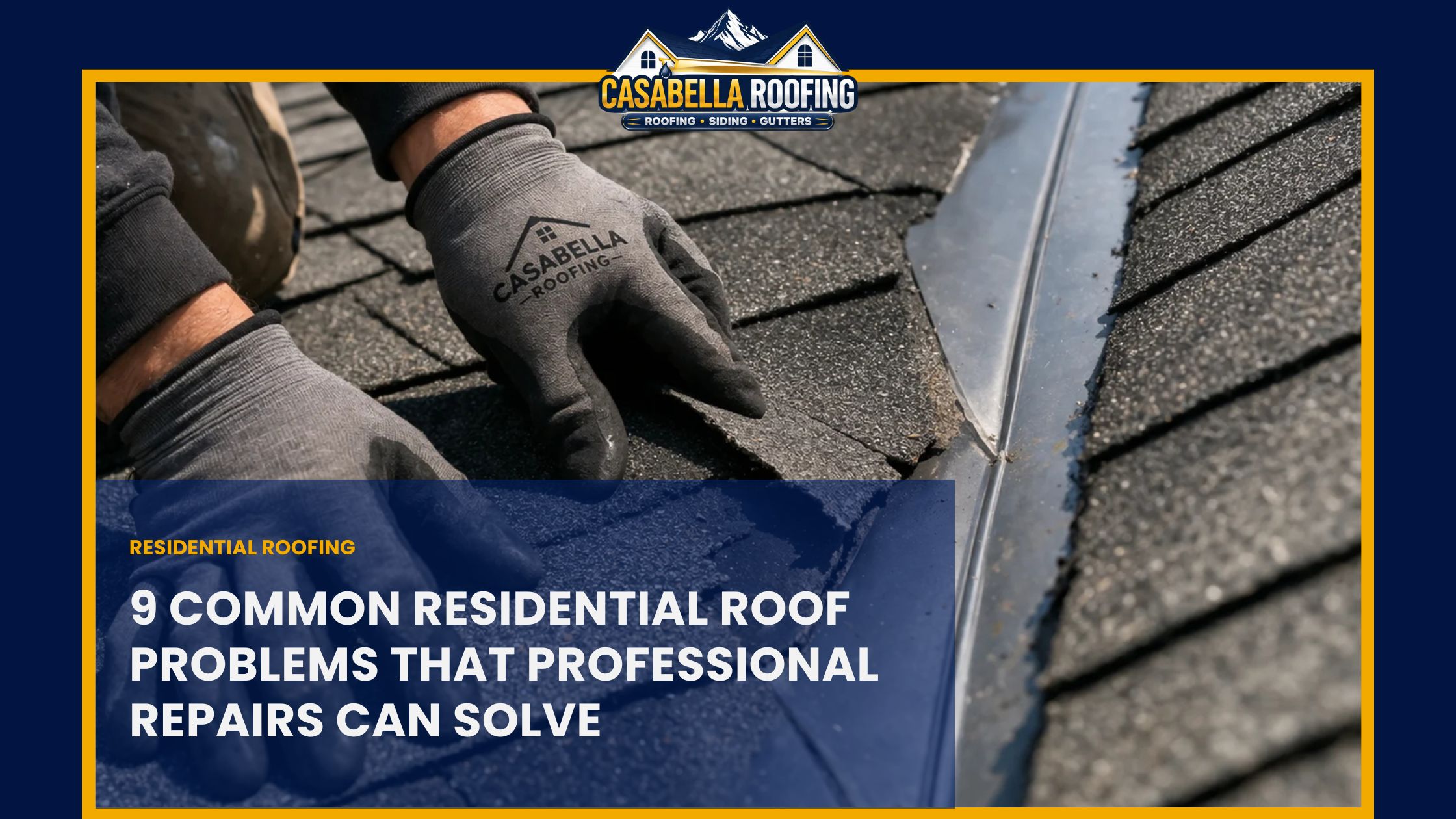
Strong winds, hail, heavy rain, prolonged sun exposure, and the natural aging process can all weaken your roofing shingles over time. As shingles age, they may begin to crack, curl, blister, lose protective granules, or become loose enough to be lifted away by strong winds. Even the loss of a single shingle can leave your roof vulnerable to moisture intrusion, especially during periods of heavy rainfall or severe weather.
Missing or damaged shingles expose the underlayment and roof decking to the elements, allowing water to penetrate the roofing system. If left unaddressed, this moisture can lead to roof leaks, wood rot, mold growth, damaged insulation, and even structural deterioration. What may begin as a small area of missing shingles can quickly develop into a much larger and more expensive roofing problem if repairs are delayed.
3. Damaged Roof Flashing
Roof flashing plays a critical role in protecting the most vulnerable areas of your roofing system. It is installed around chimneys, vents, skylights, dormers, roof valleys, and where the roof meets exterior walls to create a watertight seal that prevents rainwater from penetrating your home. Although flashing is made from durable materials such as aluminum, galvanized steel, or copper, years of exposure to harsh weather, moisture, fluctuating temperatures, and normal expansion and contraction can cause it to rust, crack, warp, loosen, or separate from the roof.
When flashing becomes damaged or improperly sealed, water can easily find its way beneath the roofing materials, even if the surrounding shingles are still in excellent condition. Because flashing failures often occur in hidden or hard-to-see areas, homeowners may not notice a problem until water stains appear on ceilings, walls, or attic spaces. If left unaddressed, leaking flashing can lead to damaged insulation, wood rot, mold growth, deteriorating roof decking, and costly structural repairs.
4. Storm Damage
High winds, heavy rain, hail, and falling branches can all damage residential roofing systems. Some storm damage is obvious, while other issues remain hidden until leaks develop weeks or months later.
A professional roof inspection after severe weather helps identify damaged shingles, lifted flashing, punctures, and other problems before they worsen.
Timely repairs reduce the risk of additional damage and may also support the insurance claims process when storm-related repairs are necessary.
5. Clogged Gutters Causing Roof Damage
Gutters play an essential role in directing rainwater safely away from your roof, siding, foundation, and landscaping. Although they are often overlooked, a properly functioning gutter system is one of the most important components of your home’s overall roofing system. When gutters become clogged with leaves, twigs, dirt, pine needles, and other debris, rainwater can no longer flow freely through the downspouts. Instead, water begins to pool along the roof’s edge or overflow onto other parts of the home.
Over time, this excess moisture can seep beneath roofing materials, damage the roof decking, and contribute to roof leak repair. Overflowing water may also cause fascia boards to rot, deteriorate the soffits, stain exterior siding, and even weaken your home’s foundation if drainage problems persist. During colder weather, trapped water can also increase the risk of ice dams, placing additional stress on the roofing system and creating further opportunities for water intrusion.
6. Poor Roof Ventilation
Proper attic ventilation helps regulate temperature and moisture levels throughout the year. Inadequate ventilation allows heat and humidity to build up inside the attic, which can shorten the lifespan of roofing materials and contribute to mold growth.
Professional roof repair may include improving ventilation by evaluating intake and exhaust systems to create better airflow and protect the overall roofing system.
7. Sagging Roof Areas
A sagging roof is a serious warning sign that should never be ignored. It may indicate weakened decking, structural deterioration, water damage, or excessive weight caused by trapped moisture.
Professional roofing contractors perform a thorough inspection to determine the underlying cause before recommending the most effective repair solution.
Correcting structural issues early helps prevent more extensive damage and improves the long-term safety of your home.
8. Moss and Algae Growth
Homes in the Pacific Northwest frequently experience moss and algae growth because of the region’s damp climate. While moss may appear harmless, it traps moisture against roofing materials and can gradually lift shingles, creating opportunities for water intrusion.
Professional roof maintenance removes moss safely without damaging roofing materials while helping preserve the roof’s appearance and performance.
Preventative treatments may also be recommended to reduce future growth.
9. Aging Roofing Materials
Even well-maintained roofs eventually experience wear after years of exposure to sun, rain, wind, and seasonal weather changes. Aging shingles may become brittle, lose protective granules, or develop cracks that reduce their ability to protect your home.
Professional roof repairs address aging components before widespread deterioration occurs, extending the life of your roofing system and delaying the need for a full roof replacement.
Protect Your Home with Professional Residential Roof Repairs
Your roof works every day to protect your home from the elements, but even the highest-quality roofing system requires maintenance and occasional repairs. Recognizing common residential roof problems early allows homeowners to prevent costly structural damage, improve energy efficiency, and extend the life of their roof.
Whether you’re dealing with a roof leak repair, missing shingles, storm damage, deteriorating flashing, or aging roofing materials, professional repairs provide long-lasting solutions that restore the safety and reliability of your home.
At Casabella Roofing, our experienced team provides trusted residential roofing services throughout Kirkland and the surrounding communities. We take pride in delivering honest recommendations, quality workmanship, and dependable roof repair solutions that help homeowners protect their investment for years to come.